RAW Recovery & Wellness · A Visual Teaching
The Baobab Tree
Ancient. Inverted. Holding more than it shows.
A map for men in recovery.
The tree that looks upside down is not broken. It is built for exactly this.
History & Origin
The tree of life
Adansonia — older than the cities men have built
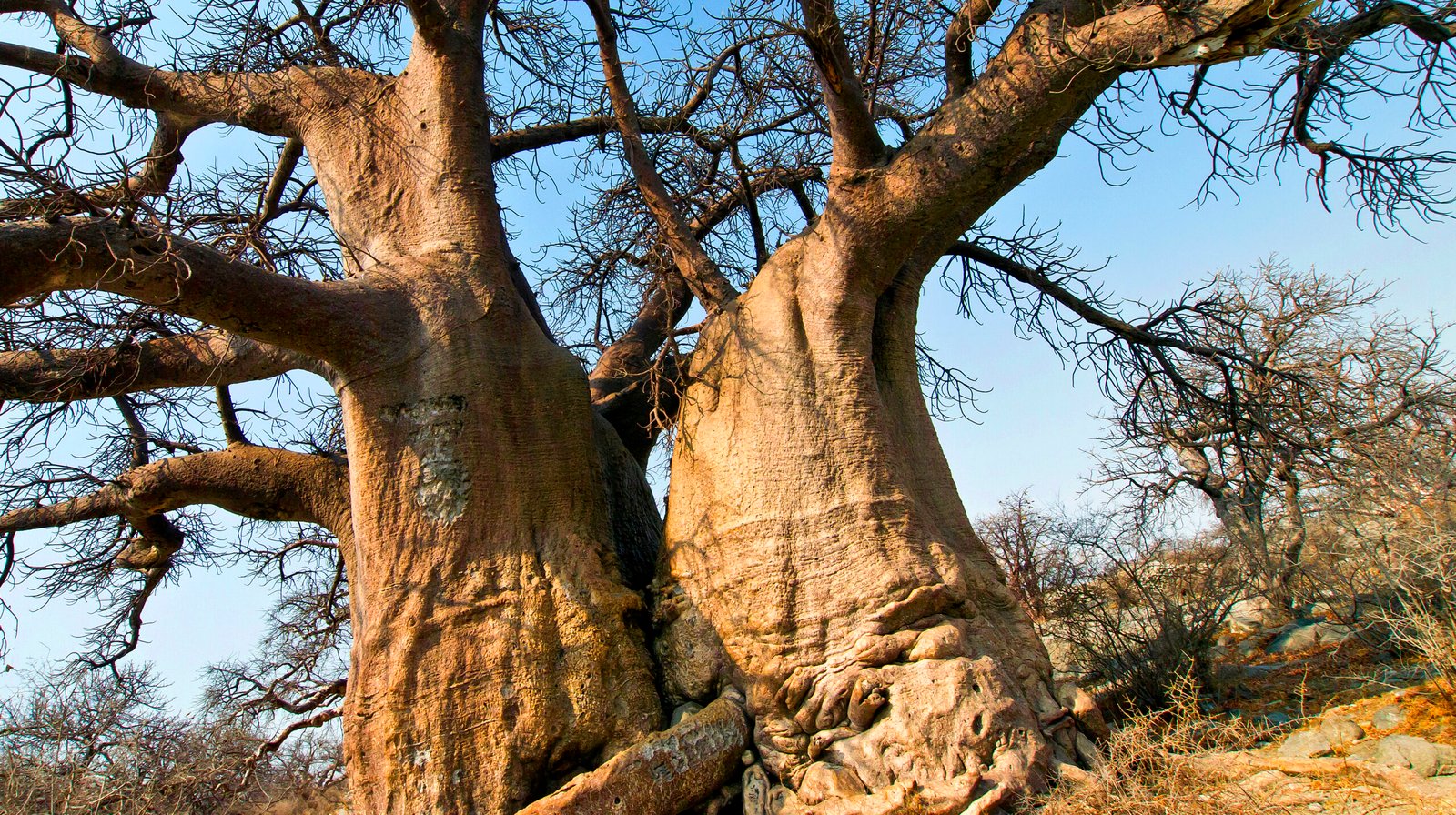
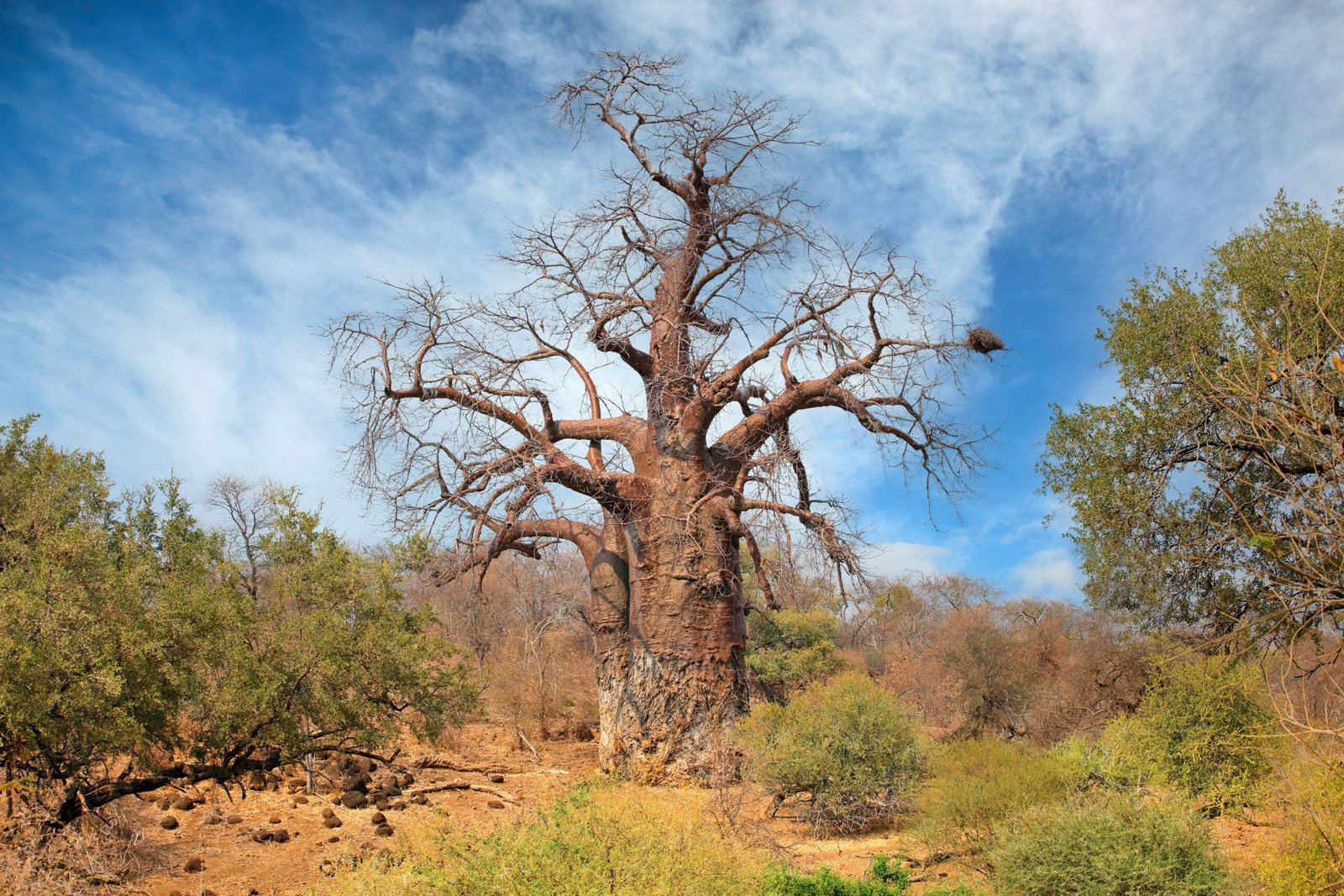
The baobab — Adansonia — is one of the oldest living organisms on earth. Some specimens are more than two thousand years old. Native to sub-Saharan Africa, Madagascar, and Australia, it is revered across cultures as the tree of life, the mother tree, the meeting tree. In the Sahel, entire communities have gathered beneath a single baobab for generations: to settle disputes, to trade, to bury their dead.
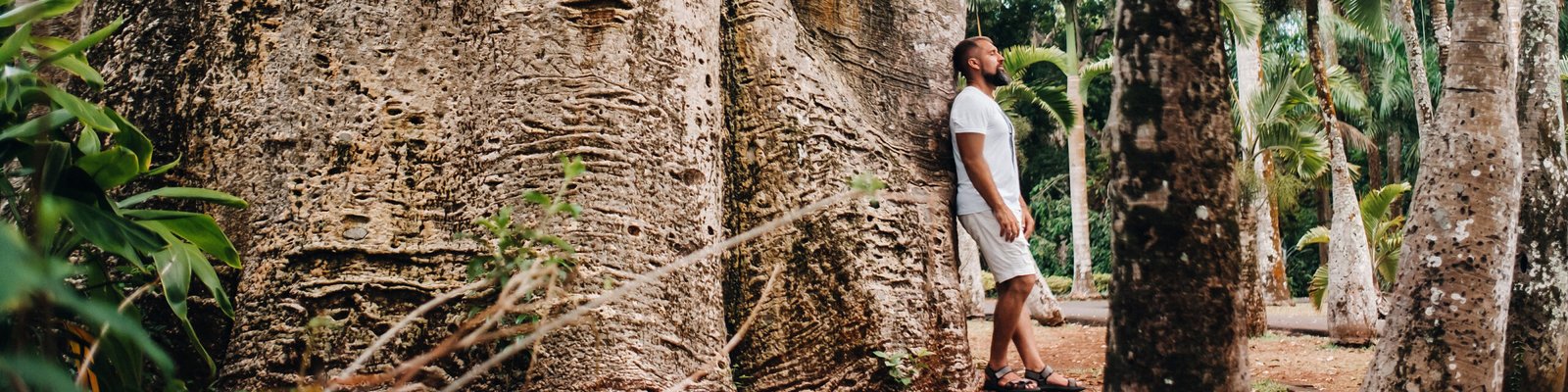
What makes the baobab extraordinary is not its height but its capacity. Its vast, barrel-like trunk — sometimes thirty feet in diameter — is not solid wood but a living reservoir. It stores tens of thousands of gallons of water through the long dry season, when the savanna around it is dust and nothing else is alive. In that season, animals strip its bark, eat its fruit, drink from its roots. The tree sustains entire ecosystems without apparent effort, and survives all of it.
African folklore offers several explanations for its strange appearance. One says God was displeased with the baobab's pride and replanted it upside down, roots in the air, as punishment. Another says the baobab simply refused to stay put, uprooting itself and wandering, until God lost patience and shoved it back into the earth headfirst. A third, quieter story says it was always meant this way — that what looks like punishment is actually a gift. The roots in the sky can drink the rain directly. The inversion is the adaptation.
A two-thousand-year-old baobab has survived fire, drought, animals stripping its bark, and centuries of dry seasons. Not through armor. Not through rigidity. Through root depth.
Three Teachings
What the baobab teaches
In the RAW context
01
Root depth
The baobab survives fire, drought, and centuries of dry seasons — not through armor, but through the depth of its roots.
Emotional fortitude is not hardness. It is depth.02
Stored water
In lean times, the baobab releases what it has quietly held. Power-with looks like this — a regulated nervous system that can give without depleting.
Hold without controlling. Give without running dry.03
The inversion
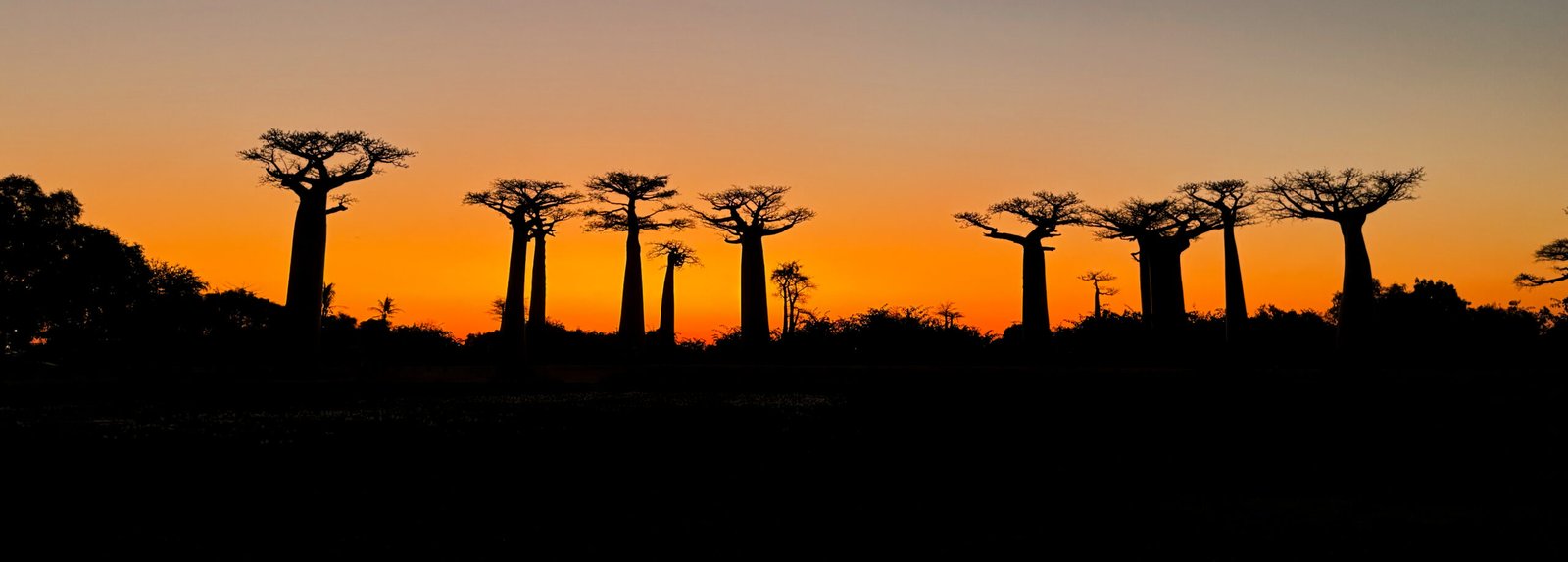
When it loses its leaves, the branches look like roots. Men in recovery often feel upside down, inside out.
This is not brokenness. This is the design working.
The Stored Water
Capacity, not performance
The tree does not know it is being watched. It simply has water.
The baobab does not perform its generosity. It does not announce that it is sustaining the ecosystem. It simply holds the water — accumulated slowly, over years, through its root system — and releases it when others need it. There is no depletion in this. The tree does not give until it is empty. It gives from abundance, and the abundance is replenished in the next rainy season.
This is what RAW means by power-with. Not giving from a place of fear, obligation, or the need to be needed. Giving from capacity — the deep, quiet, biological capacity of a nervous system that has been tended, widened, and allowed to fill. A man who has done this work does not need to dominate the room to feel safe. He does not need to control the outcome to feel powerful. He can hold what others cannot hold, and release it slowly, steadily, without drama. The tree does not know it is being watched. It simply has water. And the desert comes to drink.
The Inversion — In RAW Coaching
The work the canopy has been waiting for
The body below consciousness is not smaller than the mind above it
Most coaching, therapy, and recovery work happens above the soil line. Talk. Insight. Narrative. Reframe. These are valuable — the canopy needs tending. But a man can do years of above-ground work and still feel stuck, reactive, unable to hold intimacy or sustain peace, because the root system has never been addressed.
Somatic work is below-ground work. It does not ask: what do you think about your experience? It asks: what do you notice in your body right now? Where is there tension? What happens in your chest when you say that out loud? This is not softer work. It is older work. It is the work the canopy has been waiting for.
The baobab's inversion is also a statement about visibility. In Western culture, and in many recovery models, the mind is seen as primary and the body as secondary — the instrument the mind drives. The baobab reverses this. The roots are not smaller than the branches. They are not less important than the canopy. They are the whole reason the canopy can exist at all. Tending them is not supplementary to the real work. Tending them is the real work.
The body below consciousness is not smaller than the mind above it. It is not less important. It is the whole reason the canopy can exist at all.
The Shift
From canopy to roots
What changes when the root work begins
The RAW Application
How the baobab appears in coaching
A non-clinical frame for why the work goes below the surface
We use the baobab image in several ways at RAW. In early conversations with clients, it provides a non-clinical, non-pathologizing frame for why the work goes below the surface — why we are interested in the body, not just the story. For many men, the idea that their roots are as large and complex as their visible life is genuinely new. They have spent years believing the problem is in their thinking. The baobab suggests the thinking is the canopy, and the canopy is fed from below.
We also use it as an image of fortitude. Not the fortitude of the armored man who cannot be touched. The fortitude of a tree that has survived two thousand years of fire, drought, and stripping — not because it hardened, but because it deepened. Every difficult season grew the roots further. Every loss increased the capacity to hold. This is the arc of recovery when it goes all the way through: not hardening against life, but developing the root depth to hold more of it.
And finally — the water. We return to the stored water when we talk about what becomes possible in later recovery. A man who has done his root work is not surviving the dry season. He is the tree that makes the dry season survivable for everyone around him. His children, his partner, his community, the next generation of men who have no map — they come to the baobab because it has water. Because it has held what it accumulated, and it gives from that place, steadily, without running dry.
You are not here to barely survive the dry season.
You are here to become the tree that makes it survivable for the people around you.
Recovery is the beginning of a new era in your story.
We've developed our training, our process and coaching programs to go far beyond maintenance. We're over here working together to increase our capacity for care, compassion, creativity, competition, and connection. And since it's neurological, we're starting in the body. That's how we seek to thrive & lead lives of full aliveness without compromising wellness. We've got various ways to help a man who's looking to integrate the past so that recovery becomes the launchpad for a life of leadership, connection, creative output and full aliveness.
After you stop, survive, and come out the other side of disconnetion to self, dissociation and drugs, it's disorienting. Once you've moved through the stabilization phase, new problems come up. It's not possible to have 'no problems' the key is just to have much better problems.
Most recovery models are designed to keep you from going back. RAW is designed to move you forward. We exist because men deserve more than maintenance. More than white-knuckling through each day. More than swapping one coping mechanism for another while getting more rigid and fragile in their sense of self-organization and true meaning, all while staying 'clean'.
Regulation disorders — whether substance-based, process-based, or relational — are not character failures. They are the logical output of a nervous system that developed and calibrated to hold what life demanded. You didn't fail, it was actually pretty ingenious that your system developed in the way it did. But now, your system is under-built for the load it needs to carry. The intimacy, the thrill of wonder, creation, your highest potential for experience & expressoin ... all of that comes with the neural capacity to hold and process more energy, better. Now that you're sober, training for this is possible.
RAW exists because the question after recovery doesn't need to stay "how do I stay clean?" It can evolve into "what do I build now, that harnesses my intelligence & intensity without compromising my capacity for intimacy, peace and love?" .
Power-over doesn't start with other people. It starts with you.
When most men hear "dangerous leader," they picture someone who dominates others — the boss who controls through intimidation, the partner who manipulates through withdrawal, the father whose approval feels like a moving target. But that's the end of the story, not the beginning.
The beginning is how you lead yourself.
Before you ever used power-over with another person, you used it on yourself. Before that, it was used on you so you overrode your body's signals. You suppressed the emotion that didn't fit the situation, or misdirected it to expess something else that got you better responses. You didn't learn the difference between sensing, emotions, and feeling. You bulldozed past exhaustion, past grief, past the quiet voice that said this isn't working — because stopping felt like weakness and weakness felt dangerous.
That is power-over leadership of the self. And it is the training ground for every coercive pattern that follows. A man who has learned to dominate his own nervous system into submission will inevitably — unconsciously, automatically — reach for dominance in his relationships, his leadership, his parenting, his recovery. He'll also end up blowing things up at some point, it's a matter of when, not if.
You cannot lead others with attunement if the way you lead yourself is through force. The external pattern is always an echo of the internal one.
This is why RAW starts with self-leadership. Not the motivational-poster version — the real version that begins in your nervous system and body. We're going to help you ask: Do you override your own signals? Do you coerce yourself into compliance? Do you suppress what's truly needed in order to maintain what's momentarily functional? What would your body say about the chronic cost of your misattunement?
A man who leads himself with power-over is a dangerous leader. Not because he intends harm — but because the only thing in his self-protection tool kit is control. So he overtly, or covertly, attemps to control others, the relationship, the team. The family. First and foremost, himself.
We are training to to equip you with another tool kit. Attuned self-leadership looks like influencing from love, not domination. The ability to read your own system accurately, to trust the info and process it adeptly, that's what it takes to make choices from clarity instead of compulsion. That starts when you stop coercing yourself, you stop needing to coerce everyone else. And that is the shift we're making in our Fortitude Circle, and the Men of Fortitude Process.
The integrated, systems-based approach to high-performance for fast processing, high-acheiving men in recovery
Three principles organize & underly everything we offer, research, develop and create. These are also the phases men move through in our Men of Fortitude program.
Self Attunement First
Everything begins with accurate perception — of yourself, of others, of the systems you exist within. This takes neurological capacity, a wide window for tolerating feeling & stress, and the embodied ability to self-regulate. We restore your ability to read your own signals so you stop overriding the intelligence your body is already offering you over the first weeks of our work. Self-attunement is the foundation we can build on, and we'll need to. Relational and systemic attunement follow, and that puts even more demands on the body + mind's ability to process the right information effectively.
Somatic + Spiritual Integration
Your body is not just carrying your emotions — it is computing them and coordinating those bodily responses. Most people don't learn how the body and mind actually work. The difference between affect, sensing, perception, emotions, feeling and consciousness. Especially after the first few years of sobriety, this is a game changer. Once you see it, you'll never unsee it. We work with all the 8 senses to recalibrate the feedback loops that substances and compulsive behaviors engrained. Recovery that lives only in your head does you and everyone a disservice.
Emotional Fortitude
The structural capacity to hold what you used to run from, or react to. This is not willpower. Not gritting your teeth or supressing. This is developing & training the actual neural, emotional, and relational architecture that makes it possible to feel everything and process those feelings meaningfully. In a way that doesn't cause undue harm to your system. There's a reason Deloitte and all the leadership 'leaders' talk about Emotional Fortitude as the essential capacity leaders need today. The stronger you are in this regard, the more awe, wonder, beauty and deep meaning & pleasure you'll experience in your life. And, the more you'll bring that to others. You'll be gladly suprised at how much influence you have, and how much you have to give to others.
Our method is develop attunement through attuning to ourselves, and others, in very specific containers. After decades in the recovery industry, our team has seen thousands and thousands of men experience the same need, time and time again. The outcome of our work is a man who can lead himself — and then lead others with love & not dominance or even covert coercion.
From power-over to power-with.
The old model kept men in control but out of connection. It produced compliance but not trust, sobriety but not aliveness, structure but not meaning. We build something different.
The most powerful shift is training to hold the physiological, spiritual, mental and emotional realities of living with the tension of paradox. The shadow, the light, destruction, creation. It's complex.

How we help
First things first ... is intervention, detox and treatment needed? If that's the case, schedule a consultation with Dave and we'll work toward you joining a Fortitude Circle in the future.
Once you're navigating beyond stabalization, it's about re-calibrating & building a particular kind of capacity. That's what's needed to then train in skills and get direct results — it's not just about managing symptoms, understanding intellectually, it's about taking things in the right order of operations.
Everything is connected. Everything here exists within a systems framework: your nervous system is the operating system, attunement is the process, and total fortitude is the outcome. The underlying reason is so that you can experience and express your spirit, love, and your potential for the greatest effect. You can't do that if you're set up to fail, at least not for the long-haul.
Consulting & Private Coaching
Finding the motivation to get sober, whether it's from substances or other more covert things, is huge. But, then you're faced with the overwhelming prospect of going from where you are now, to the other side of the canyon.
Men's Fortitude Circle
Structured group environments where men train, with 8-10 other brothers, in 12 weeks of emotional, spiritual and cognitive fortitude. This is the work of re-calibrating nervous systems that have moved through substance use disorder. Together we are doing the work of alchemizing all that to experience & express our highest potential. For living, for giving & receiving, for creating, for loving, for leading. Learn more and follow us on Substack →
Business Attunement
If you're in the recovery industry, and run a business, then you're going to get why this is the only way to influence, market and grow your business that stays aligned, and focused truly on your clients needs (without sacrificing the business's needs, or your own). If you're tired of constantly paying so much attention to 'marketing strategy' because all that old SEO stuff and ad funnels just aren't doing it, and if you care about attuned vs. coercive influence, schedule an initial consulting session with Dave & Melissa.
Men of Fortitude Retreat | Oct & Nov 2026 still available
This fall, you come to San Diego. In the quiet town of Fallbrook, about 15 miles from the coast into the Racho Santa Margarita river valley, you'll gather together with 8-10 other men for an intensive where you'll do work that's truly worth investing your budget in. And we're talking body, spiritual 'budget' and money. Reach out for an info packet or schedule a call with Melissa or Dave →
Recovery Plan, Orientation then Guided Action
Comprehensive assessments and individualized recovery architecture. When there are complex situations, like family businesses, workplace integration, let alone family dynamics, a personal concierge approach fits best.
If you're reading this, you probably got here because of someone amazing. This program, and these groups are about training in capacity to feel, to think, to act, to love.
And to lead ourselves and others with attunement. Join a Fortitude Circle™.
Apply | initial session
Fortitude Men's Circle | Coaching | the Fortitude Process™
Coaching Philosophy
COACHING TRAINING